


Understanding Bearing Bronze Alloys in Marine Applications
Marine Bearing Bronze: Driving Durability and Performance at Sea
The demanding marine environment requires robust materials. Bearing bronzes, copper alloys designed for wear resistance, corrosion control, and strength, are proven for critical moving components in ships and offshore structures. This explores key bearing bronze alloys used in naval architecture and marine engineering, comparing their properties and emphasizing their role in vessel efficiency and longevity.
Selecting the Right Bearing Bronze for Maritime Durability.

Why Bearing Bronze is Indispensable in Marine Applications
Bearing bronze excels in marine applications due to its:
- Corrosion resistance: Formation of a protective patina in saltwater prevents various forms of corrosion, unlike ferrous metals.
- Wear and galling resistance: Low friction and high galling resistance ensure smooth operation and prevent seizing.
- Lubricity and embeddability: Leaded tin bronzes offer inherent lubricity and embed abrasives, protecting shafts.
- High load-carrying capacity: Aluminum bronze and similar alloys withstand heavy static and dynamic loads.
- Machinability: Easy machining into complex components like bushings and sleeves.
Ship Applications of Bearing Bronze: Alloy Selection Guide
Key Bearing Bronze Alloys for Ship Applications: A Comparative Look
| Feature | C93200 (SAE 660) | C93700 (SAE 64) | Aluminum Bronzes (e.g., C95400, C95500, C95800) | Manganese Bronzes (e.g., C86300, C86500) |
| Alloy Type | Leaded Tin Bronze | High-Lead Tin Bronze | Aluminum Bronze / Nickel Aluminum Bronze (NAB) | High-Strength Manganese Bronze (Technically Brass) |
| Primary Composition | ~83% Cu, 7% Sn, 7% Pb, 3% Zn | ~80% Cu, 10% Sn, 10% Pb | Cu base, 9-12% Al, + Fe, Ni¹, Mn | Cu base, + Zn, Mn, Al, Fe |
| Relative Strength | Moderate | Moderate | High to Very High | Very High |
| Tensile Strength (Typical) | ~35 ksi / 241 MPa | ~34 ksi / 234 MPa | >90-100 ksi / 620-690 MPa (esp. C955/C958) | ~110 ksi / 758 MPa (C86300) |
| Seawater Corrosion Resistance | Fair | Fair to Good (esp. mild acid) | Excellent (C95800 NAB is Superior¹) | Good (Generally less than Al Bronze) |
| Wear Resistance / Anti-Friction | Good balance | Excellent Wear Resistance | Excellent (inc. cavitation/erosion resistance) | Very Good Wear Resistance |
| Self-Lubricity / Embeddability | Good (due to Lead) | Superior (High Lead content) | Moderate | Fair |
| Machinability | Excellent | Good | Fair to Good | Fair |
| Key Advantage | Versatile “Workhorse”, Good Cost/Performance Balance | Superior in Marginal Lubrication Conditions | Top Strength & Corrosion Resistance (esp. NAB¹) | Highest Strength (where ultimate corrosion resist. is secondary) |
| Typical Marine Applications | General Bushings & Bearings (Pumps, Winches, Rudder Assy), Stern Tubes | Boundary Lubrication Bearings, Thrust Washers | Propellers, Shaft Sleeves, High-Load Bearings (Rudder), Valves, Pumps, Underwater Fittings, Gears | High-Load/Slow-Speed Bearings, Gears, Structural Components |
Notes:
-
C95800 (Nickel Aluminum Bronze – NAB): Offers superior corrosion resistance, especially in polluted or high-velocity seawater, compared to other Aluminum Bronzes like C95400 or C95500.
-
Requires consistent lubrication when used in applications like rudder assemblies or stern tubes.
Comparative Overview: Choosing the Right Marine Bearing Bronze
| Feature | C93200 (SAE 660) | C93700 (SAE 64) | C95400/C95500 (Al Bronze) | C95800 (Ni-Al Bronze) | C86300 (Mn Bronze) |
| Primary Alloy Type | Leaded Tin Bronze | High-Lead Tin Bronze | Aluminum Bronze | Nickel Al Bronze | Manganese Bronze |
| Relative Strength | Moderate | Moderate | High | Very High | Very High |
| Tensile Strength (Typical) | ~35 ksi / 241 MPa | ~34 ksi / 234 MPa | ~85 ksi / 586 MPa | ~95 ksi / 655 MPa | ~110 ksi / 758 MPa |
| Seawater Corrosion | Fair to Good | Fair to Good | Excellent | Superior | Good (less than AlBr) |
| Wear Resistance | Good | Very Good | Excellent | Excellent | Very Good |
| Self-Lubricity | Good (due to Lead) | Excellent (High Lead) | Moderate | Moderate | Fair |
| Machinability | Excellent | Good | Fair to Good | Fair | Fair |
| Key Marine Advantage | General Purpose, Cost | Boundary Lubrication | Strength, Corrosion Resist | Best Overall Corrosion | Highest Strength |
| Common Uses | Bushings, Pumps | Thrust Washers | Propellers, Valves, Bearings | Propellers, Pumps | High-Load Gears, Bushings |
Critical Marine Applications Where Bearing Bronze Shines
The theoretical properties translate into vital real-world applications:
-
Propulsion Systems:
-
Propellers: Aluminum Bronzes (esp. C95500, C95800) dominate due to strength, cavitation resistance, and corrosion control.
-
Stern Tube / Propeller Shaft Bearings: Leaded Tin Bronzes (C93200, C93700) or Aluminum Bronzes are used, often oil- or water-lubricated, supporting the main propeller shaft. Self-lubricating variants (graphite-plugged) are increasingly popular for reduced environmental impact and maintenance.
-
-
Rudder Systems:
-
Rudder Stock Bearings & Pintle Bushings: Must handle immense loads and friction. Aluminum Bronze or high-strength Manganese Bronze are common choices, providing smooth, reliable steering.
-
-
Seawater Pumps and Valves:
-
Impellers, Casings, Wear Rings, Valve Bodies & Trim: Aluminum Bronzes (C95400, C95800) or Nickel-Copper alloys are essential for handling abrasive, corrosive seawater without failure.
-
-
Deck Machinery:
-
Winch Bearings, Crane Bushings, Capstan Components: Leaded Tin Bronzes (C93200) provide reliable operation under moderate loads in exposed deck conditions.
-
-
Underwater Fittings & Hardware:
-
Through-hull fittings, scoops, and other submerged components benefit from the superior corrosion resistance of Aluminum Bronzes.
-
Reliability in Extreme Marine and Offshore Conditions
Bearing bronze’s resilience, particularly in exposed marine and heavy-duty applications, makes it crucial beyond propulsion, steering, and fluid systems. C93200 bronze suits deck/offshore machinery (cranes, pumps); NAB offers better harsh environment performance.. Explore more industries.


Durable Marine Bearings: Prevent Bearing Failure with the Right Bronze.
Self-Lubricating Bearing Bronze: Enhancing Marine Performance
Self-lubricating bearing bronze, commonly standard alloys like C93200 or C95400 with embedded graphite plugs or oil-impregnated pores, offers key advantages in marine settings: reduced or eliminated external lubrication (decreasing maintenance and pollution), consistent performance under submersion or intermittent wetting, high load capacity with low friction, and inherent corrosion resistance from the base bronze alloy.
Self-Lubricating Marine Bronze Bearings & Bushings
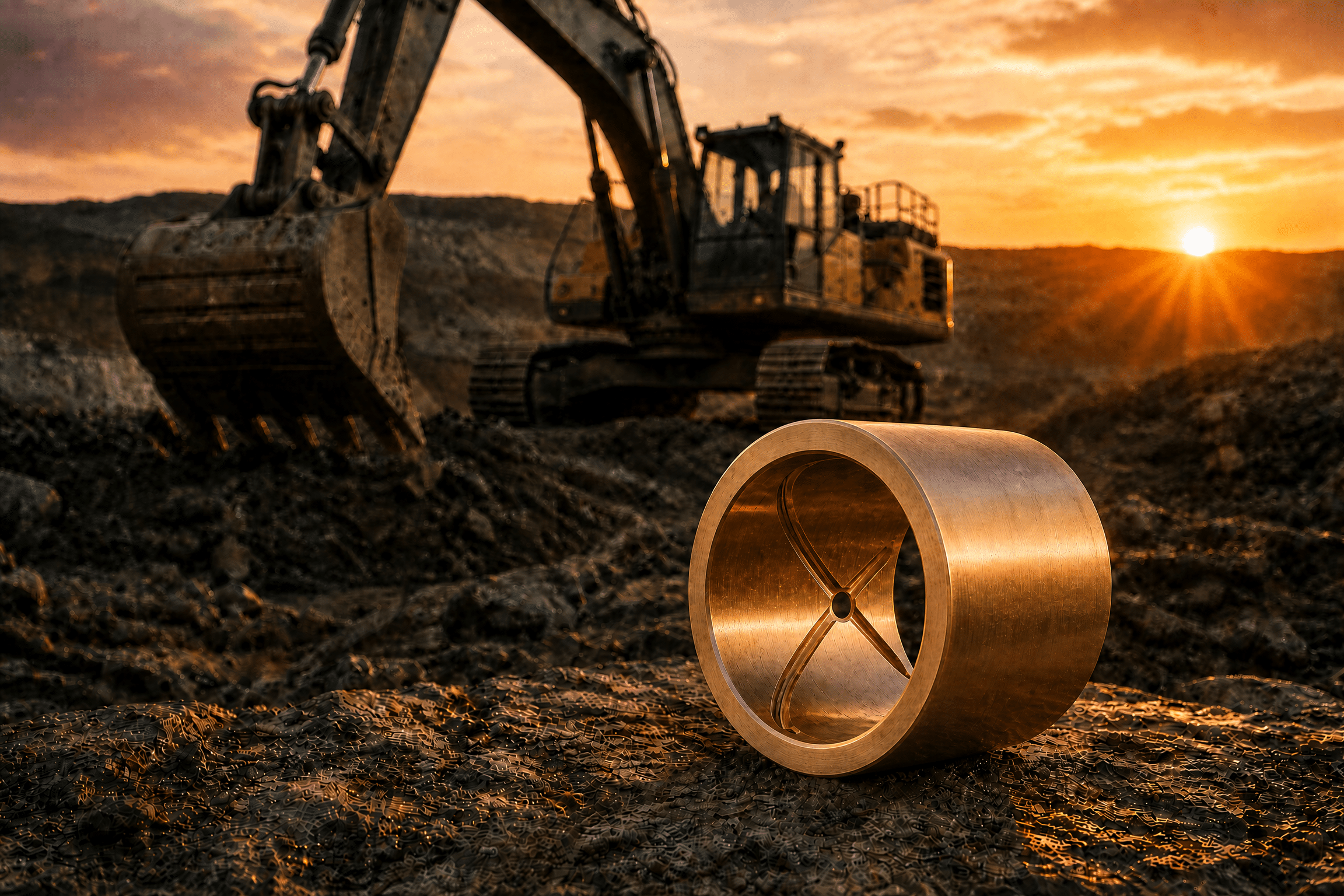
Self-lubricating bronze bushings, typically C93200 or C95400 alloys with graphite plugs, are vital for self-lubrication in marine applications. These precision bushings improve reliability, lower maintenance, and decrease lifetime costs for critical moving components on ships and offshore platforms. Choosing the right self-lubricating bronze bearing enhances maritime durability.

Finding Reliable Bearing Bronze Suppliers
Sourcing quality bearing bronze hinges on selecting reputable suppliers who offer certified materials (meeting UNS, SAE, or ASTM standards with MTRs for verification), a variety of forms (bar, tube, plate, and custom castings), technical expertise in alloy selection for marine applications, full traceability linking material to certifications, and timely delivery. For self-lubricating bearing bronze, prioritize suppliers specializing in these value-added products, particularly those with proven experience in the marine industry.

bearing bronze bushing, graphite plugged
Heavy-duty bronze bushings and bearings with graphite, for industrial machinery or marine applications.

bearing bronze plate, wear resistance
Unique wear plates or slide components for manufacturing equipment.

